
Purpose of EOT
It is often incorrectly thought that entitlement to an EOT automatically carries with it an entitlement to compensation for prolongation costs during the period of the EOT. The main effect of an EOT is that the Contractor is relieved of its liability for liquidated damages during the period of the extension and is able to reprogramme its works to completion. Its entitlement to compensation is usually to be found in other provisions of the contract or at law. The benefit of an EOT for the Employer is that it establishes a new contract completion date, prevents time for completion of the works becoming ‘at large’, and allows for coordination/planning of its own activities, such as training operational staff. (SCL D&D Protocol 2nd Edition, page 22)
Result of Delay Analysis
The delay analysis is structured in two key steps:
1. Calculation of Extension of Time (EOT)
To determine the EOT entitlement, acceptable delay analysis methods include:
- Time Impact Analysis (TIA)
- Time Slice Windows Analysis
- As-Planned vs. As-Built Windows Analysis
These methods help identify excusable delays and quantify the number of days for which the contractor is entitled to an extension without liability for liquidated damages.
2. Calculation of Compensable Delay for Prolongation Costs
To assess the contractor’s entitlement to compensation for prolongation costs, a commonly accepted method is:
- Collapsed As-Built Analysis
This method isolates delays caused by the employer or other compensable events, allowing for the calculation of the financial impact on the contractor.
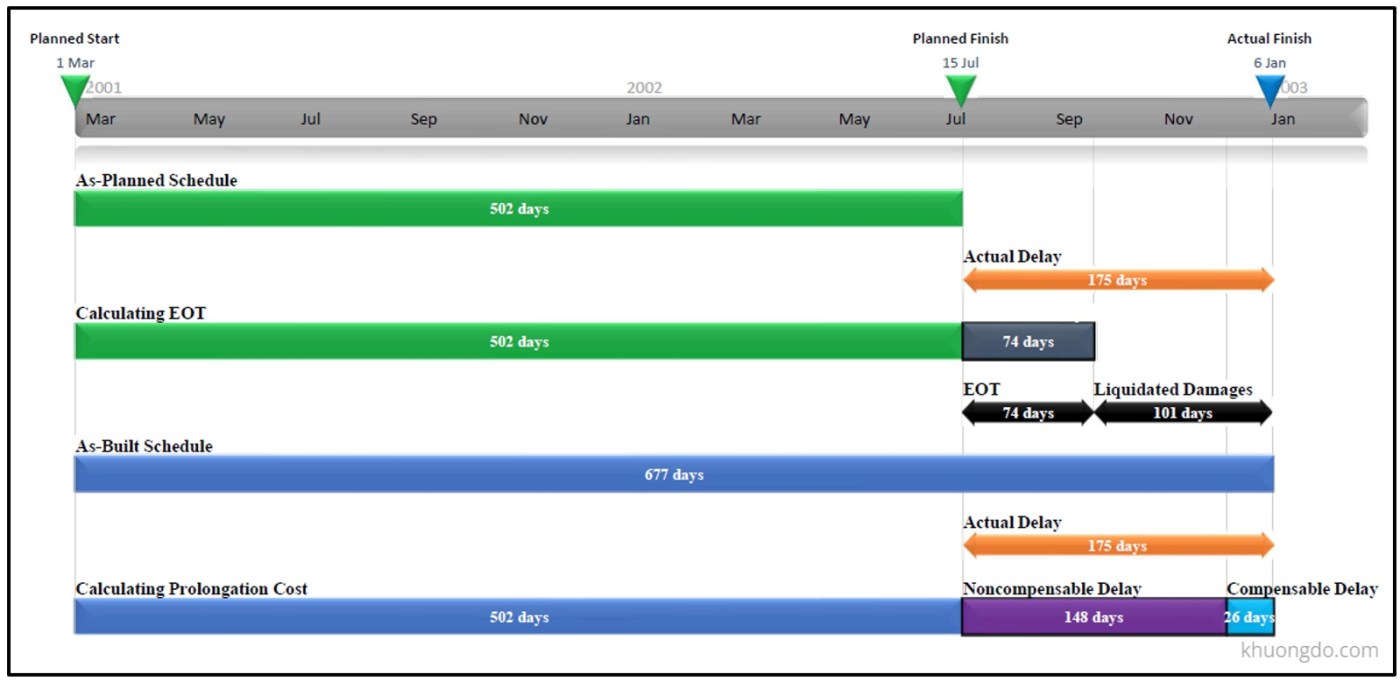
Illustrative Example: EOT and Prolongation Cost Claim
The results of the steps above are illustrated in the following example.

- Planned Project Duration: 502 days
- Actual Project Duration: 677 days
- Total Delay: 175 days
Step 1: EOT Calculation
Using an appropriate delay analysis method, the contractor is granted an Extension of Time of 74 days.
→ Remaining delay subject to liquidated damages: 101 days (175 – 74)
Step 2: Compensable Delay Calculation
Using the Collapsed As-Built method, 26 days of the delay are identified as compensable.
→ These 26 days are eligible for prolongation cost recovery.
Conclusion
The contractor is entitled to:
- Extension of Time: 74 days
- Prolongation Cost Compensation: 26 days


A highly informative and well-structured explanation! This piece does an excellent job of clarifying the distinction between EOT entitlement and compensation for prolongation costs an area often misunderstood.
The use of clear steps, accepted delay analysis methods, and a practical example really brings the concepts to life. A valuable read for anyone in construction project management or contract administration!
LikeLiked by 1 person